

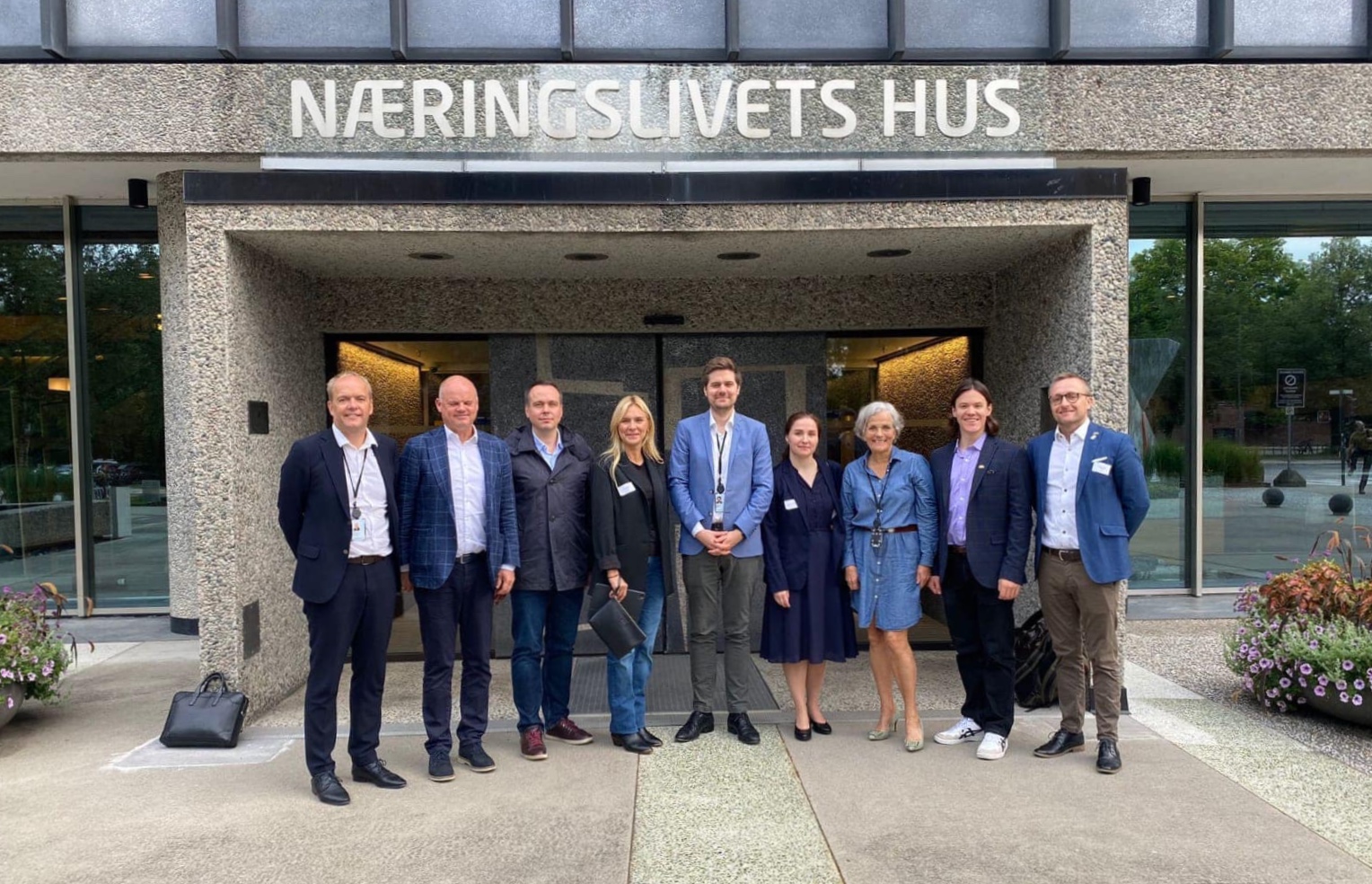
From August 27 to 31, the ONS 2024 Conference on the Future of Energy and Sustainable Development took place in Stavanger, Norway.
The conference was attended by European Commissioners, dozens of energy ministers and government officials from various countries, and hundreds of experts, professionals, and leaders from the energy sector across the European Union and around the world.
During a special session titled “Energy Security and Energy Transition,” the Head of the State Agency on Energy Efficiency and Energy Saving of Ukraine, Anna Zamazeeva, alongside representatives from other countries, discussed Europe’s role in the energy transition, promoting the growth of renewable energy sources, ensuring sustainable energy supply, accelerating decarbonization, enhancing energy security, and supporting the rapid expansion of renewable energy.
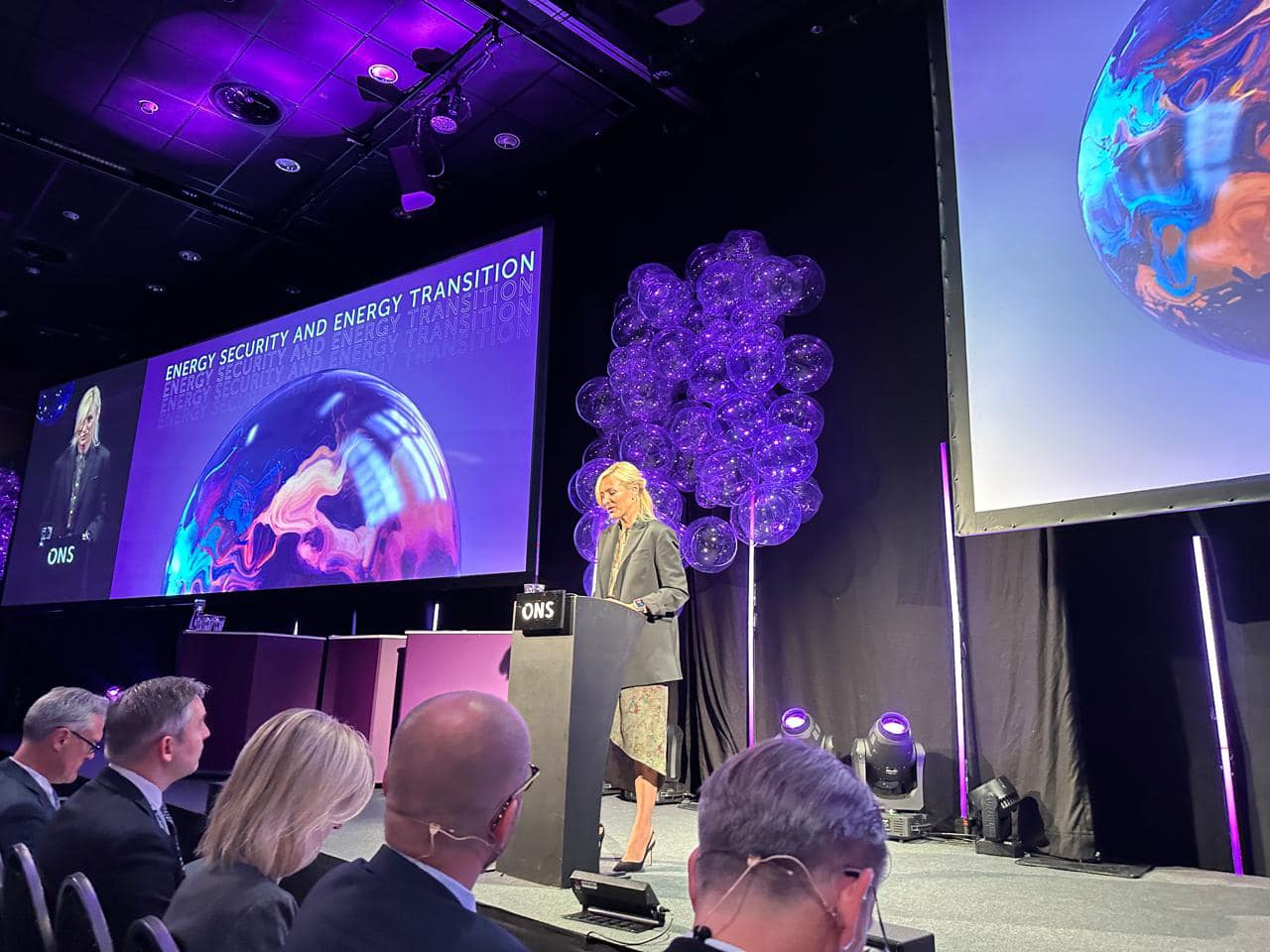
In her speech, “Energy Security in Wartime. Energy Security from Ukraine’s Perspective,” the Head focused on Ukraine’s strategic efforts in energy efficiency, alternative fuels, and decarbonization, as well as the critical importance of these measures for Ukraine’s economy, energy security, and integration into the European Union.
Key points from Anna Zamazeeva’s speech:
- Ukraine’s energy sector is under constant attack. In the spring of this year, Russia began using precision weapons to intensify strikes on civilian and critical energy infrastructure. The consequences have been far more devastating.
- The targets of Russian attacks have been highly maneuverable energy facilities, including hydroelectric power plants, thermal power plants, and combined heat and power plants. This type of generation helps balance the Ukrainian power system, and without it, the system loses its stability.
- Since March of this year, Ukraine has lost 9 GW of capacity. There has been a severe shortage of electricity in the Ukrainian power system. Russia has destroyed and damaged all of Ukraine’s thermal power plants. Russia has also damaged major hydropower plants, and the Kakhovka HPP was completely destroyed a year ago. 80% of critical combined heat and power plants needed during the heating season have been destroyed in attacks.
- Ukraine is repairing the damaged equipment using available resources. Unfortunately, the country’s needs remain unchanged. Ukraine still requires expensive equipment, such as gas turbine power stations, gas piston cogeneration units, solar power stations, inverters, heat pumps, and others.
- Due to the electricity deficit, Ukraine is relying on support from its partners. The deficit can be partially reduced through energy efficiency measures, restoring damaged capacities, and building distributed generation facilities using renewable and alternative energy sources.
- In these realities, the goal is to maximize the use of distributed generation capacity before winter arrives, as such facilities are much harder for the enemy to target.
- For Ukraine, it is crucial to ensure the stability and reliability of the energy system by increasing available generation, with a focus on renewable energy sources and the development of distributed generation. From our perspective, this system should not rely solely on nuclear energy but also on renewable sources and a decentralized energy structure.
Today, the Ukrainian Government:
1) Simplifies the conditions for the construction and connection of generation facilities to ensure the rapid development of distributed generation and provides opportunities for individuals and businesses to obtain financing for the purchase of energy equipment.
2) Eases regulations for the construction and connection to gas, thermal, and electrical networks.
3) Stimulates further investment in renewable energy projects and the application of global energy efficiency practices in all sectors, as well as energy storage solutions.
4) Creates conditions for the development of renewable energy in line with European practices.
5) Implements a system of guarantees of origin for electricity from renewable energy sources and biomethane, which will promote the market development of renewable energy.
6) A separate decision has set an additional annual quota to support entities producing electricity from alternative energy sources, and a schedule for pilot auctions to allocate support quotas for 2024. As is well known, auctions to allocate support quotas are the most widespread global mechanism for promoting the development of renewable energy on a competitive basis.
Anna Zamazeeva also highlighted the State Fund for Decarbonization and Energy Efficient Transformation of Ukraine.
The State Agency on Energy Efficiency and Energy Saving has developed a state support program for implementing energy-efficient solutions, which is being carried out through the Decarbonization Fund. This project includes a financial mechanism that provides state support for businesses and municipalities by issuing loans for energy efficiency and decarbonization measures, as well as leasing options.
The State Fund for Decarbonization and Energy Efficient Transformation of Ukraine was initiated by the Verkhovna Rada and supported by the President of Ukraine in April 2023. It is under the jurisdiction of the State Agency on Energy Efficiency and Energy Saving of Ukraine, with reputable international organizations such as UNIDO (United Nations Industrial Development Organization) and UNDP Ukraine acting as development agents and project selectors financed by the fund.
The core of the Fund’s operations is to provide businesses, the population, and communities with financing and energy-efficient equipment. The Fund can quickly address the most urgent needs for restoring critical infrastructure and enhance energy resilience for businesses and communities by providing access to financial resources for energy efficiency measures. This is crucial to achieving maximum energy resilience for businesses and municipalities.
Ukraine has all the natural resources necessary for modern energy. The Head of the State Agency on Energy Efficiency expressed confidence that, alongside a united Europe, Ukraine will undoubtedly realize its national recovery project based on energy efficiency and decarbonization principles.
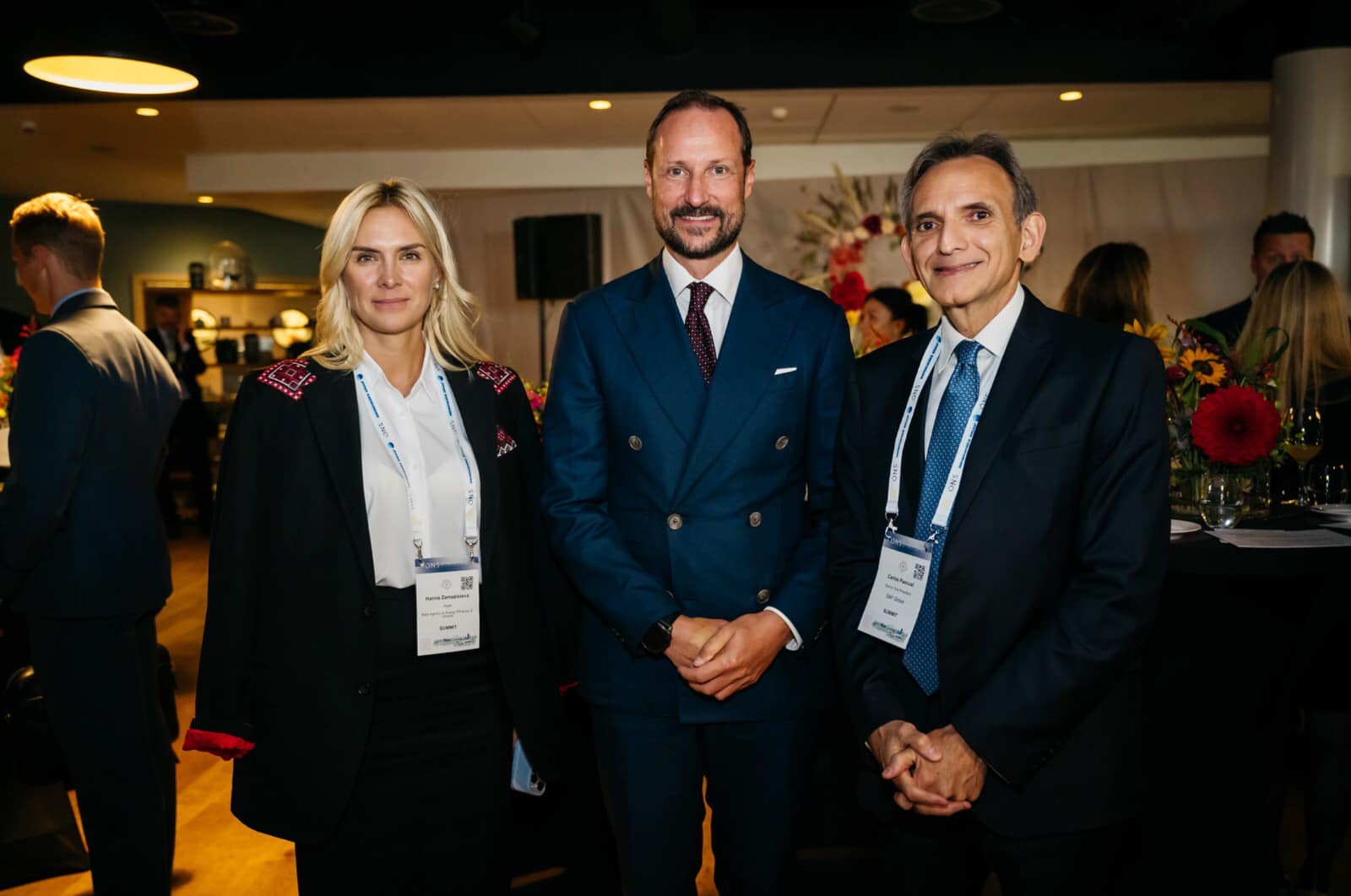
Also at the conference, high-level meetings took place with Crown Prince Haakon, 80 senior government officials, thought leaders, and top executives, where discussions were held on energy markets, energy security challenges, environmental issues, and the current geopolitical situation.
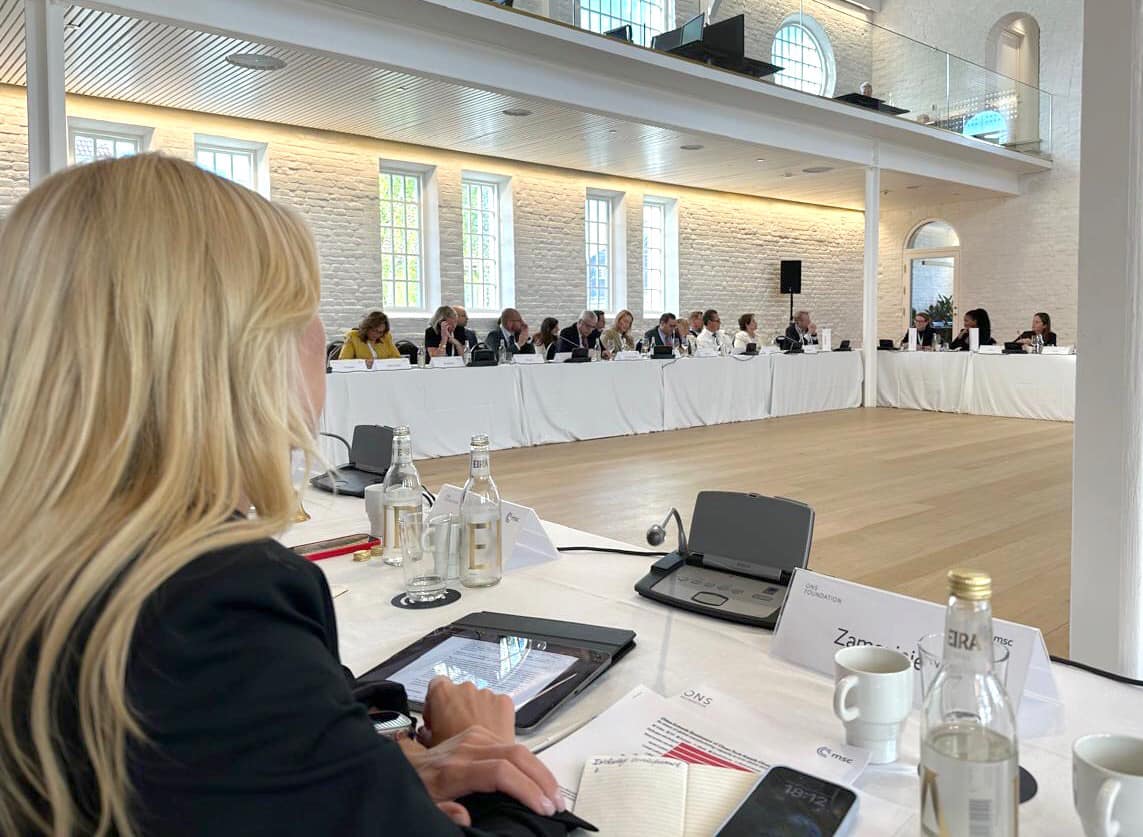
Notable roundtables with discussion sessions:
1. “Geopolitics of a Net-Zero World and Geopolitics of Energy”
- Russia has created the concept of an energy superpower – a leading global supplier of oil and gas. Moscow equates energy with one of the most powerful forms of weaponry, which it uses to dictate its rules and impose its will on other countries. This strategy is based on a number of internal and external factors: the world’s largest reserves of energy resources, the second-largest production of fossil fuels, and Europe’s critical dependence on Russian gas.
- However, the EU already adopted a strategy for energy security and independence back in 2006-2007. Many did not understand it at the time, but the new energy policy, aimed at enhancing Europe’s energy security and reducing dependence on Russian energy resources, was implemented through several key regulatory acts. One of the first EU legislative acts in this direction was the European Energy Efficiency Action Plan, adopted in 2007. The document outlined a series of measures to improve energy efficiency in the economic sectors of EU member states, integrate their energy grids and markets, shift towards renewable energy sources, and diversify oil and gas supply sources to Europe.
- Clearly, for Ukraine, its energy strategy must focus on diversification, decentralization, and deregulation; especially in these horrific times of war – a war in which Russia, as the aggressor, is destroying Ukraine’s energy system and using energy as a weapon and a tool for threats, not only against Ukraine but also many EU countries.
- Diversification of energy resources involves: increasing domestic production of all types of fuel (oil, gas, etc.), establishing new capacities, particularly for renewable energy, alternative fuels, and energy exports from Ukraine’s partners.
- Decentralization is critical for enhancing the security and resilience of our energy system both now and in the long term. Distributed generation brings energy production closer to consumers; the creation and scaling of medium and small generation facilities in our energy system is a survival strategy that makes our energy grid harder to target by missile strikes.
- Deregulation in the energy sector has just started and is embedded in the updated energy strategy. Simplification and updating of secondary legislation are underway, creating favorable conditions for the growth of renewable energy and attracting new investments into renewable energy. Targeted actions aim at improving the import and export of energy through EU borders. Deregulation must be mutual and bilateral.
- The main focus: energy efficiency runs through everything, serving as a way to optimize the use of every energy resource and as the optimal tool to enhance energy security and reduce pressure on the country’s energy system.
2. “Addressing Dependencies in Clean Tech Supply Chains”
- Ukraine possesses significant reserves of rare and rare-earth metals, including unique deposits of beryllium, zirconium, tantalum, as well as a complex of phosphorus-rich rare-earth and rare-metal ores. Confirmed lithium reserves in Ukraine are the largest in Europe. The country also has a real opportunity to enter the global market with clean and ultra-pure metals, such as gallium, indium, thallium, lead, tin… Ukraine must harness its mineral resources for prosperity. This will require new technologies and substantial investment.
- Currently, lithium mining in Ukraine is underdeveloped. The country’s lithium reserves account for about one-third of the confirmed reserves in the entire EU, making it one of the largest deposits in the EU and about 3% of global reserves.
- Titanium. Ukraine ranks in the top ten countries globally for explored titanium reserves and provides over 7% of the world’s titanium production.
- Ukraine has a powerful and developed agro-industrial sector, and its waste can and should be used for energy purposes. The use of biofuels is crucial for reliably supplying domestic clean energy production. By using alternative fuels, Ukraine could completely cover its annual gas shortfall.
Despite Russia’s full-scale aggression since 2022, 653 new projects for gas substitution in heat energy production from alternative sources have been implemented in the regions, totaling 431 MW of capacity. - The development of the biomethane market is strategically important for Ukraine. For Ukraine, as well as for the EU, this direction is of crucial significance for ensuring energy security, as biomethane is chemically identical to natural gas and can be supplied directly into gas networks without the need for infrastructure upgrades.
- Under the REPowerEU plan, the European Union has set an ambitious goal to produce 35 billion cubic meters of biomethane annually by 2030.
In conclusion, Ukraine can and should be a key partner for Europe in achieving its decarbonization, energy independence, and low-carbon economy goals. And it is gratifying that the EU recognizes Ukraine as such a partner.