

Today, experts from the 4th module of the 12-module course “Energy Efficiency for Climate Leadership” presented best practices in the field of energy management to over a hundred participants.
“Even with international ISO certifications (for quality, product safety, ecology, occupational health and safety), it is important for companies to also implement energy management – this is also a certification, but with somewhat different priorities, focusing on resource use and energy efficiency. Of course, there needs to be real-time daily monitoring of the production process to understand how the enterprise is operating, how much energy it consumes, and the status of production under these complex conditions. Additionally, significant attention should be paid to mandatory employee training, as a reboot must occur at all stages,” said the course leader, Lyudmyla Tsyganok, CEO of the “Office of Sustainable Solutions.”
Participants in the thematic Module 4, “Best practices in energy management: examples of successful energy management strategies implemented by industrial companies,” gained knowledge according to the following agenda:
“Energy Management: How to Create a Successful Strategy?” – This was the topic that opened the module, delivered by Pavlo Pertko, Director of “ENERGOMANAGEMENT PRO LLC,” Senior Expert in Industrial Energy Efficiency and Energy Management Systems at UNIDO. He emphasized key barriers to energy efficiency in industry:
- Management is focused on production and volume rather than energy efficiency
- Lack of information and understanding of energy performance metrics
- Lack of appropriate skills to define, evaluate, develop, and implement energy-efficient measures and projects
- Poor or misused monitoring systems and data
- Initial costs are prioritized over ongoing costs, with a gap between capital and operational budgets
- Employee behavior and attitudes
- Financial constraints
- Changes in production, technology, operations, and staffing over time
- Lack or limited availability of energy efficiency services and products for industry
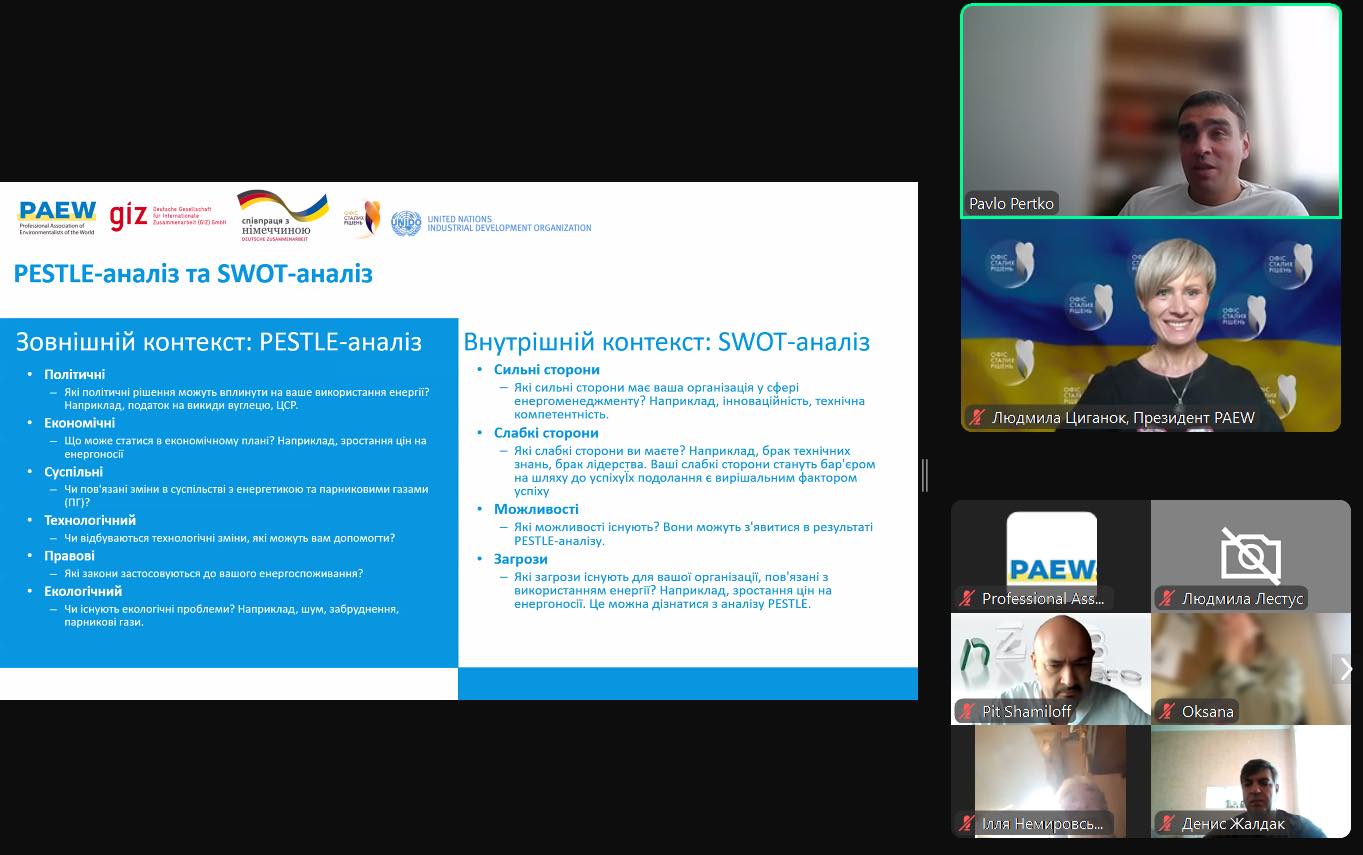
Oleksandr Karpenko, Founder of the energy management and energy monitoring startup “Unified Energy Accounting” based on open data, in addition to sharing examples of successful energy management strategies, also clearly explained who an energy manager is, how their effectiveness is measured, the role of project managers, and what a facilities manager does.
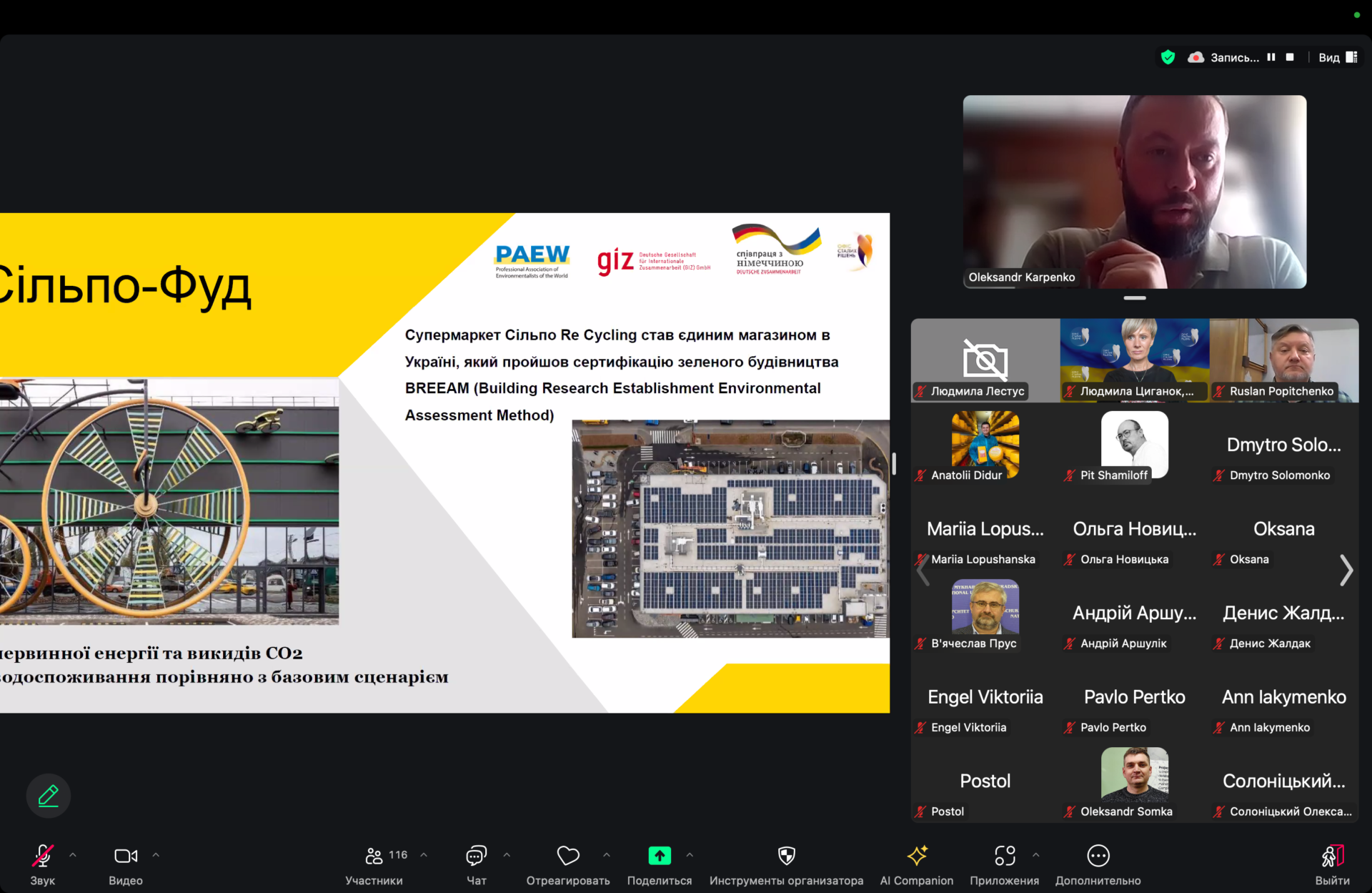
Together with the participants, Oleksandr discussed practical case studies and results of implementing energy management systems (EnMS):
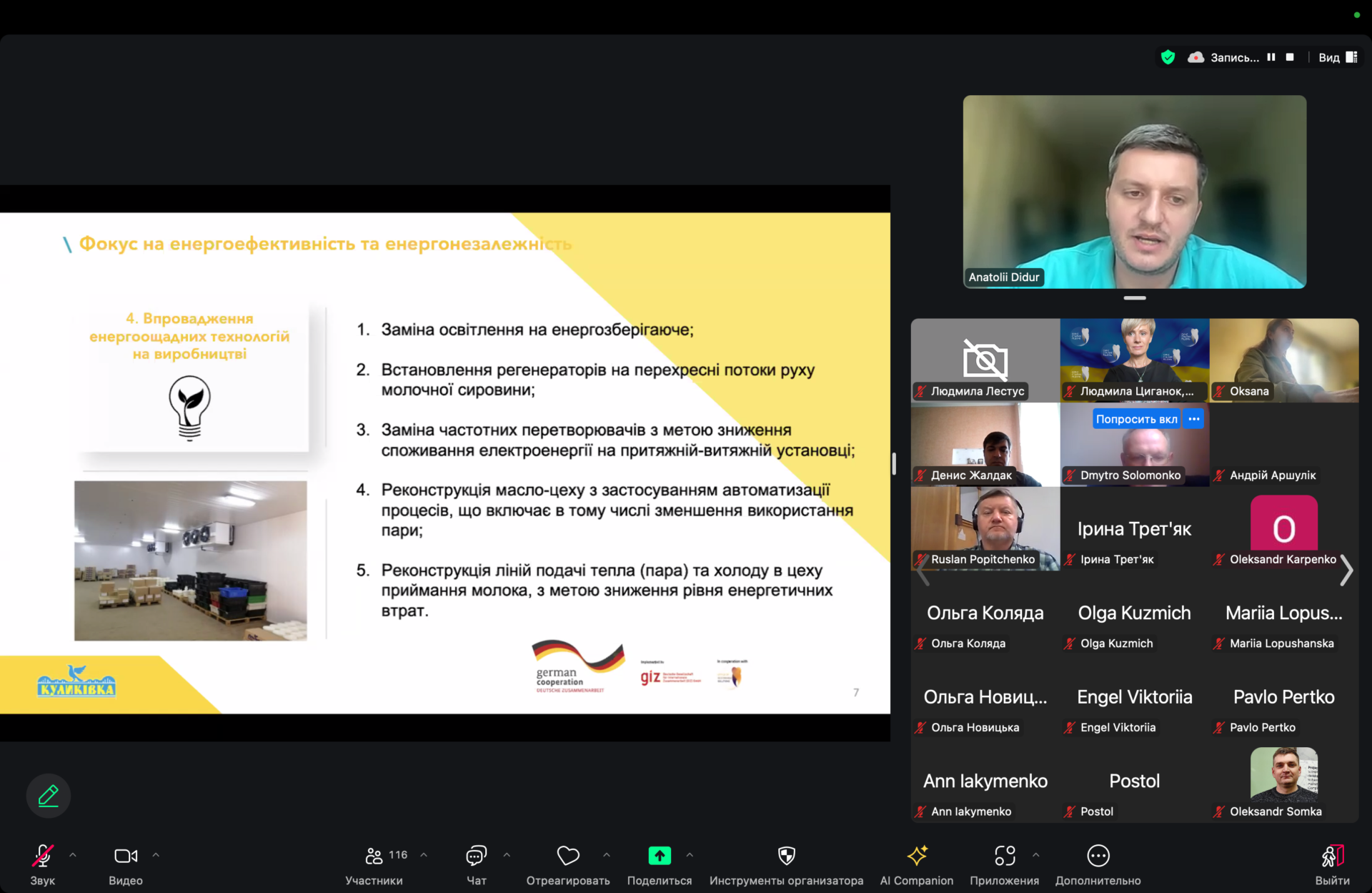
Anatoliy Didur, Chairman of the Supervisory Board of PJSC “Kulykivske Milk,” shared the path to securing funding and implementing energy efficiency and energy independence measures at the company.
Irina Andrieeva, Head of Occupational Safety, Ecology, and Certification at the Novoorzhytsky Sugar Plant, presented energy-saving projects and the energy efficiency and energy conservation initiatives at the plant.
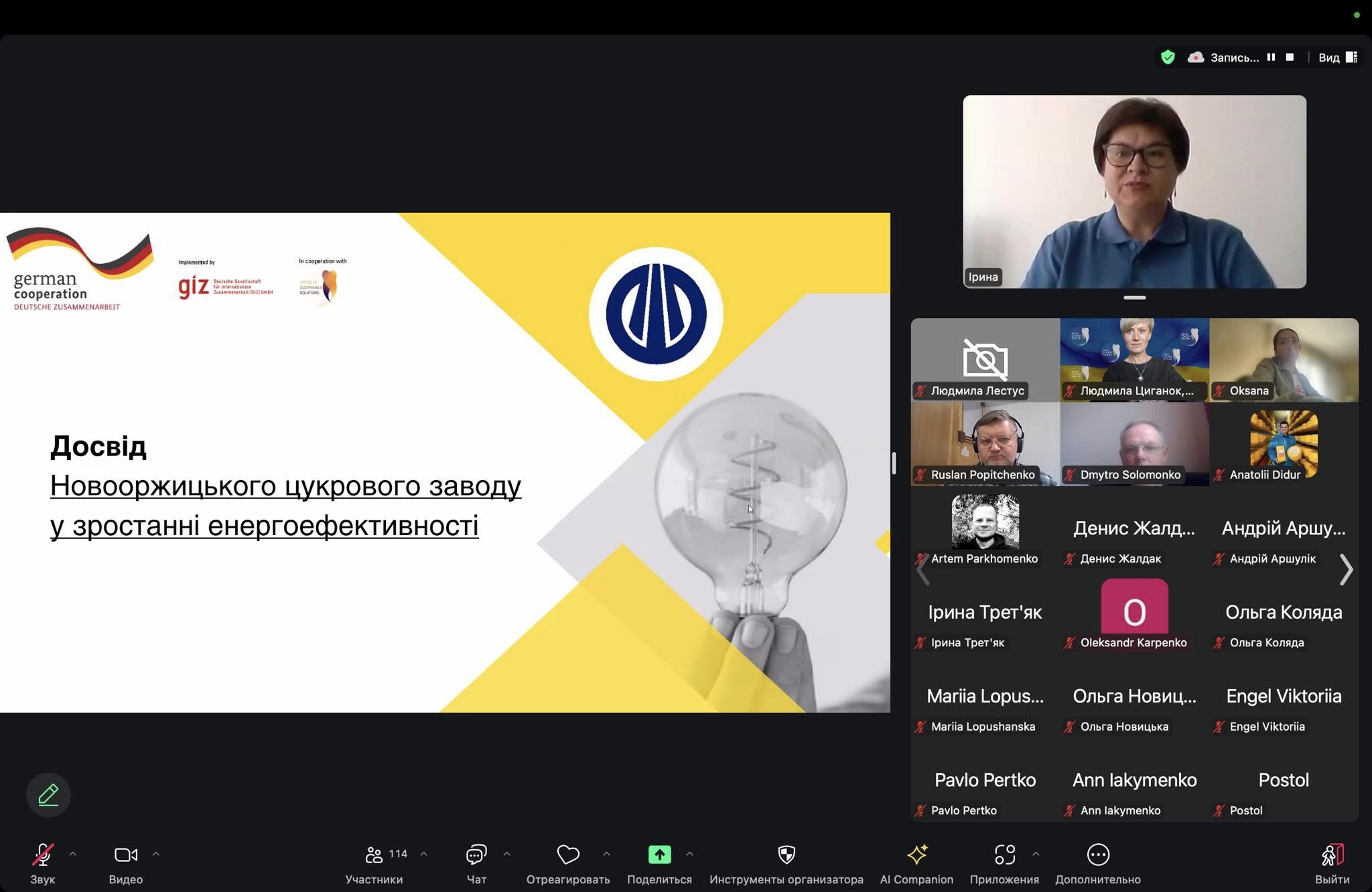
What goals were set for the team?
- Increase sugar production potential using the existing capacity.
- Reduce the use of natural resources (water, gas, coal, etc.).
- Implement a series of modernization measures at the sugar plant based on the program implemented by JSC.
Energy-saving project phases included:
1. Organizational measures:
-
- A team was formed to develop and plan the implementation of an energy management system
- A methodology was developed to assess the level of energy efficiency improvement at the enterprise using regression analysis for normalizing energy consumption
- Documented procedures were developed describing all necessary processes and actions related to the energy management system
- Compliance with the appropriate operational modes of equipment to achieve energy efficiency targets
- Application of lean manufacturing principles to analyze the root causes of both excess energy use and production downtimes, as well as energy resource savings
- Conducting internal audits of the energy management system and analyzing the results with senior management.
- Certification according to ISO 50001
2. Training and professional development:
-
- Changing employee behavior through training
- Technical managers at the plant and specialists at the central office underwent training under the UNIDO program, with over 20 specialists trained in various energy efficiency areas
- Improving resource consumption culture
- Using UNIDO’s energy management tools, which employed regression analysis for normalizing energy resource consumption
3. Technical measures for implementing automated process control systems:
-
- Introduction of energy-saving lighting
- Replacement of windows and insulation of premises
- Replacement of equipment insulation
- Installation of metering devices and enhanced control over consumption
4. Capital measures:
-
- Full or partial modernization of main equipment
- Fermentation of organic waste and sediments to produce biogas
- Potential use of solar energy