

Project «Introduction of Energy Management System Standard in Ukrainian Industry» (UKR IEE) aims to transform energy use practices in Ukrainian industry towards a sustainable and modern approach. The project promotes the implementation of Energy Management Systems (EnMS), Optimised Energy Systems (OES), and the international ISO 50001 standard.
Voluntary Agreements as a Proven Tool
One of the proven tools for effectively implementing energy efficiency policies in developed countries is Voluntary Agreements – a model of close cooperation between industrial enterprises and the state.
Supported by UNIDO
The concept of Voluntary Agreements is actively supported and promoted globally by the United Nations Industrial Development Organization (UNIDO). Thanks to the involvement of international UNIDO experts, this model is being successfully implemented in many countries around the world, including Ukraine.
International Experience for National Implementation
Within the UKR IEE Project, Ukrainian experts and representatives of government agencies had the opportunity to learn about modern practices in implementing various models of Voluntary Agreements in developed countries. This included participation in several seminars, the International Conference in Berlin with a dedicated session on Voluntary Agreements, as well as ongoing consultations with representatives of the State Agency on Energy Efficiency and Energy Saving of Ukraine (SAEE). Project representatives also took part in practical meetings with industrial partners and experts from the Danish Energy Agency (DEA) regarding the preparation and implementation of elements of Voluntary Agreements. This work was continued within the framework of the Ukrainian-Danish Energy Partnership Programme (UDEPP).
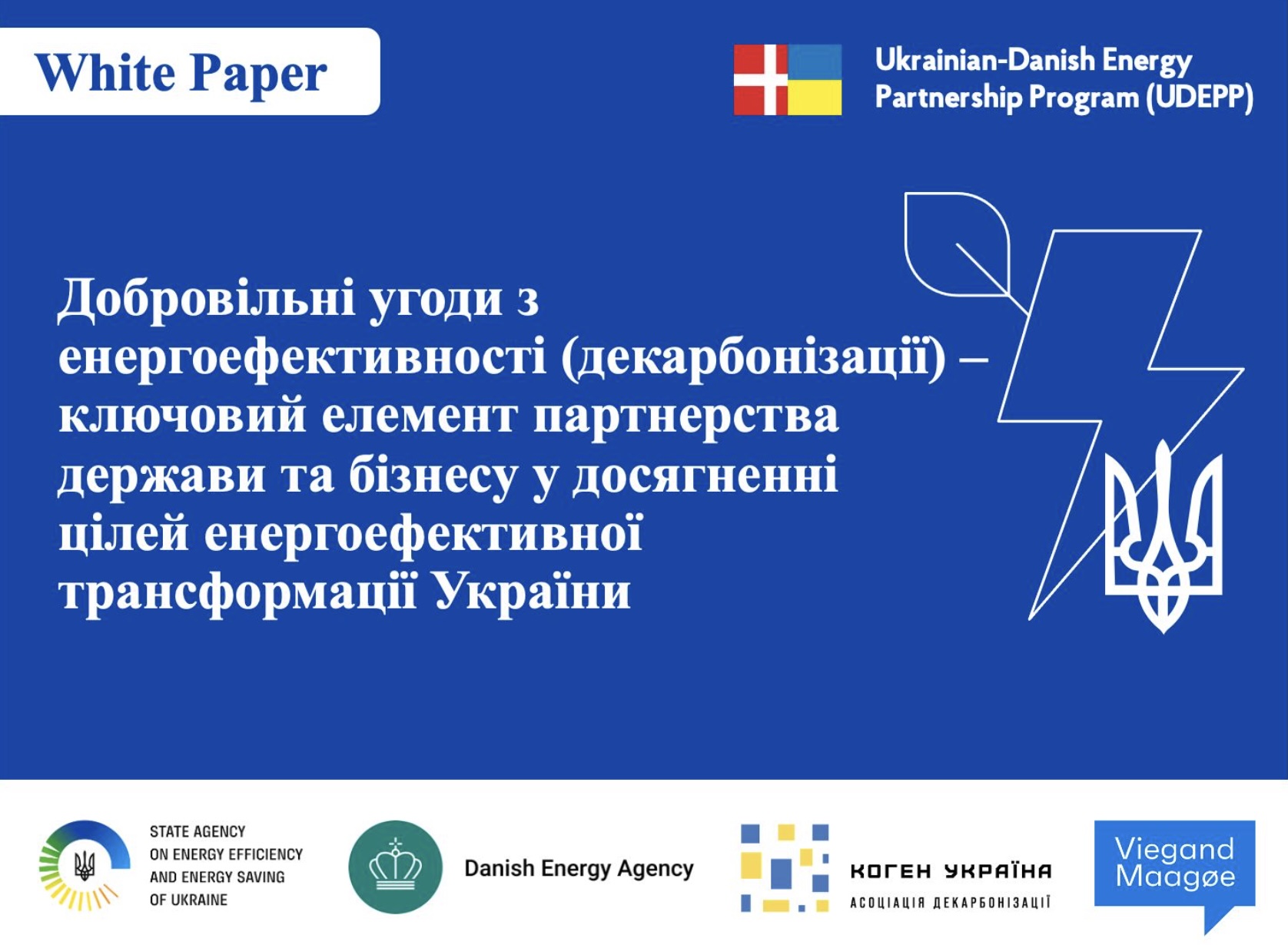
White Paper on Voluntary Agreements
One of the key outcomes of this collaboration was the development of the White Paper on the State Fund for Decarbonization and Energy Efficiency Transformation of Ukraine and Steps to Promote the Implementation of the Voluntary Agreement Scheme on Energy Efficiency – a strategic document prepared in cooperation with Danish partners. It outlines the principles of the Fund’s operation and the Voluntary Agreement Scheme.
This document may serve as a foundation for engaging businesses, communities, and municipalities in the implementation of energy efficiency projects.
📄 You can view the White Paper on the website of the State Agency on Energy Efficiency and Energy Saving of Ukraine (SAEE).